
Some newborns sleep through most of their session, while others are alert, need frequent feeding breaks, or take longer to settle. Newborn sleep during a photography session can be affected by age, feeding patterns, temperament, growth spurts, and how a baby responds to being handled and repositioned.
After photographing newborns for more than a decade, I’ve learned that a sleeping baby isn’t required for a successful Dallas newborn photography session. I adjust the pace around each baby’s cues, allowing time for feeding, soothing, and awake photographs rather than trying to force every baby into the same schedule.
If you’re preparing for a newborn photoshoot in Dallas, my Newborn Photography Experience page explains how sessions work, what to expect at the studio, and how I prepare for different newborn temperaments.W
Why Do Some Newborns Sleep More Easily During Photo Sessions?
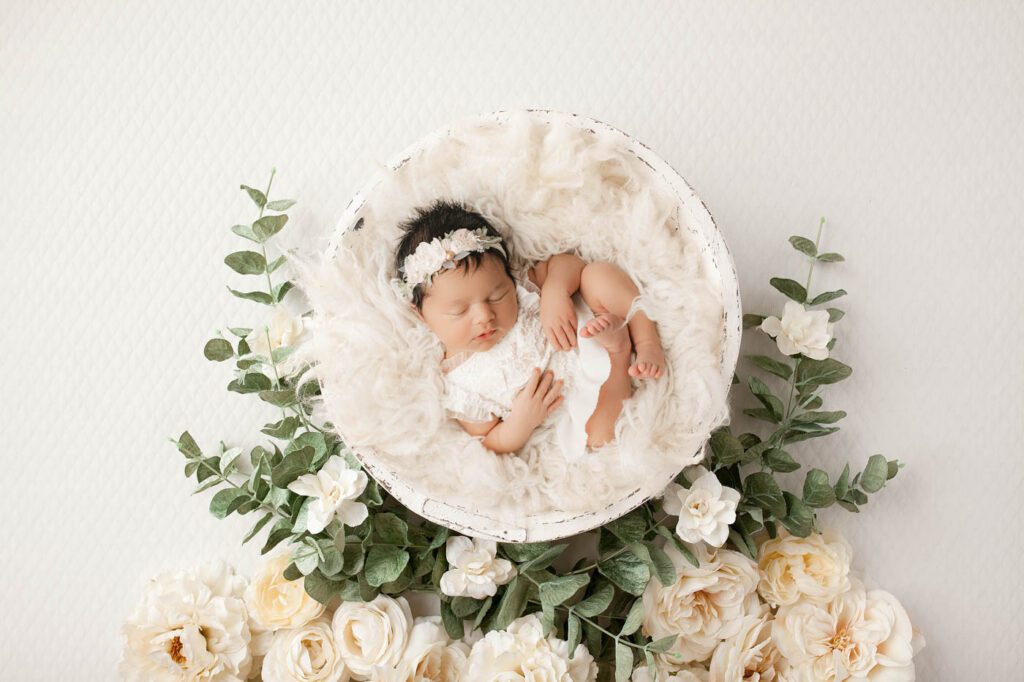
Why Some Newborns Settle More Easily Than Others
I’ve photographed siblings who behaved completely differently during their newborn sessions. One slept through nearly every setup, while another wanted to stretch, look around, and watch everything happening in the studio. Both responses are completely normal.
That experience is one reason I don’t expect every baby to follow the same routine during a newborn photography session. Instead, I adjust the pace, posing, and transitions based on how each baby responds throughout the appointment.
Several things can influence how easily a newborn settles, including:
- Natural temperament
- Feeding and hunger cues
- Baby’s age at the time of the session
- Growth spurts or cluster feeding
- Sensitivity to touch, movement, or sound
- How easily baby transitions between positions
It’s also common for a baby to spend part of the session quietly awake before eventually falling asleep. When that happens, I can photograph alert expressions and simpler poses first, then move into sleepier setups once baby is settled.
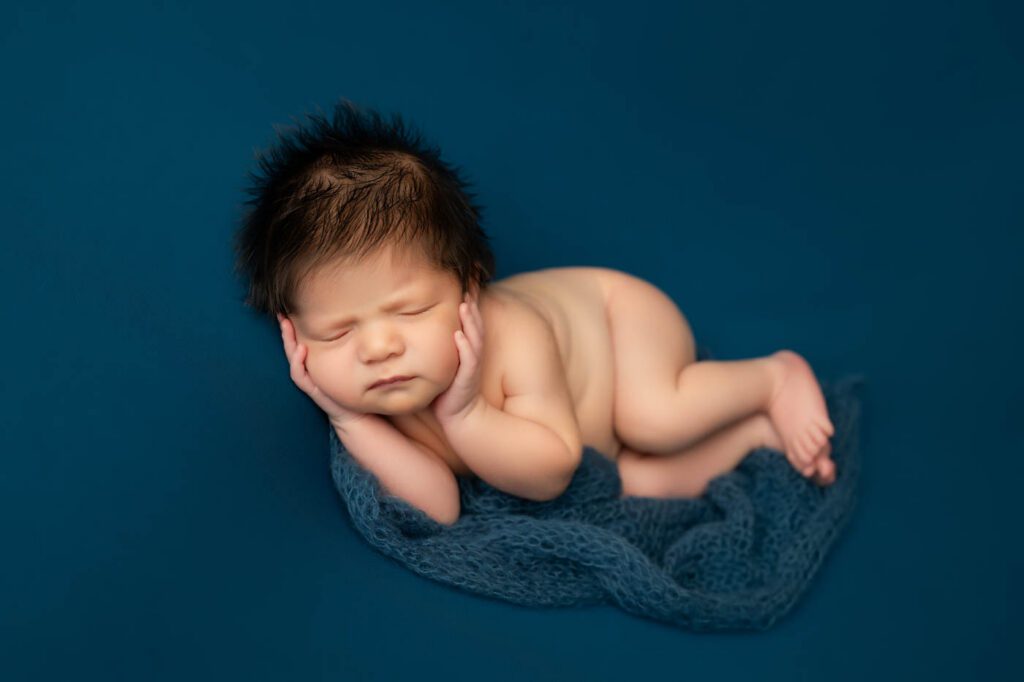
Does Age Affect Sleep During Newborn Photos?
Age can influence how easily a baby settles and how much time they spend awake during a newborn session. For posed studio photography, I typically photograph babies within the first 14–16 days, when they are often more comfortable curling into newborn poses and may transition between setups more easily.
As babies get older, they tend to become more alert and interested in what is happening around them. That doesn’t mean an older baby can’t have a successful newborn photoshoot in Dallas, it simply means I may adjust the posing and expectations based on what the baby is comfortable doing.
With older newborns, I often see:
- Longer periods of eye contact
- More alert facial expressions
- Stretching and active hand movements
- Greater awareness of light and movement
- More time needed between certain poses
After more than a decade of photographing newborns, I’ve learned that age gives me a starting point, not a guarantee. I’ve photographed six day old babies who stayed awake through much of their session and three-week-old babies who slept through several setups. Every baby responds differently.
For that reason, I watch the baby rather than the clock and adjust the session as we go. If a baby is older or especially alert, I can still create a varied gallery using comfortable poses, wrapped setups, and awake images rather than forcing sleep.

Can Feeding Help a Baby Sleep During Newborn Photos?
A well-fed baby may settle more easily, but feeding right before a Dallas newborn photography session does not guarantee that a baby will sleep. Some newborns are ready to settle after eating, while others need time to burp, stretch, or simply remain awake for a while before becoming comfortable.
After more than a decade working as a newborn photographer in Dallas, I’ve found that allowing a few quiet minutes after feeding often works better than immediately trying to move into another pose. I build feeding and soothing breaks into the session whenever a baby needs them rather than trying to keep every newborn on the same timeline.
Parents can help by:
- Bringing enough milk or feeding supplies for the session
- Expecting that baby may want to eat more than once
- Allowing time for burping and settling after a feeding
- Following baby’s normal hunger cues rather than watching the clock
- Knowing that feeding breaks are already part of the session process
These pauses are a normal part of newborn photography in Dallas and give me time to work around the baby rather than rush into the next setup before they are comfortable.
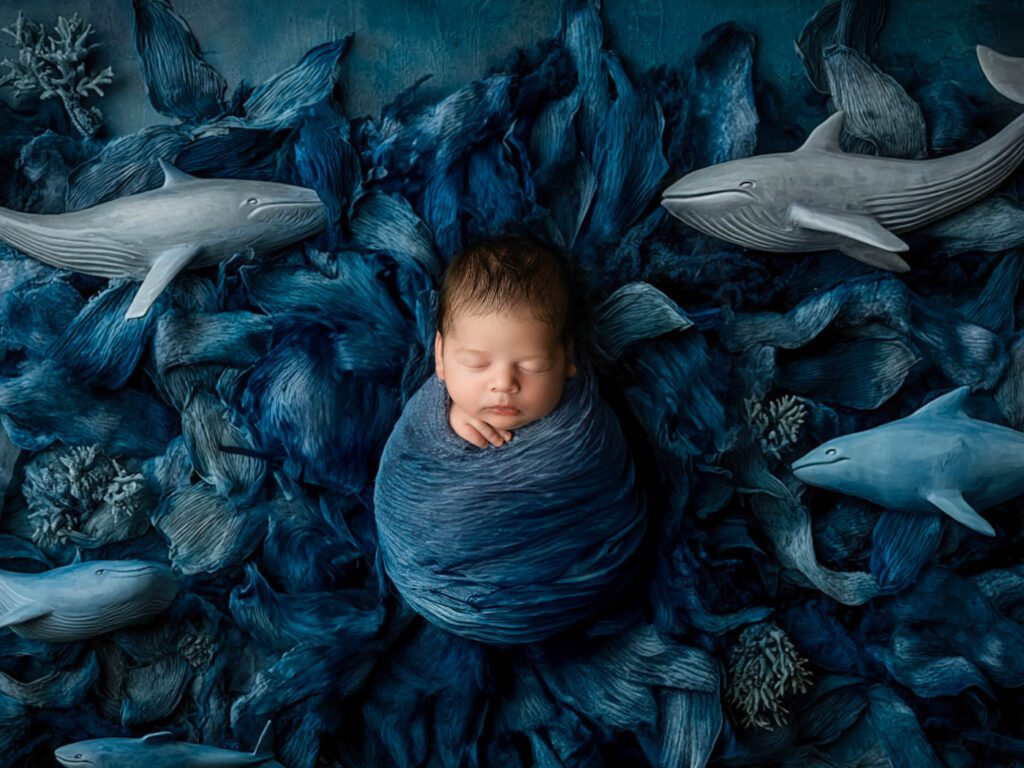
Does Swaddling Help Babies Settle During Newborn Photos?
Swaddling can help some babies relax during a Dallas newborn photography session, which is why I often begin with wrapped setups when a baby needs a little extra time to settle. Some newborns are comfortable with their arms tucked in, while others prefer having their hands closer to their face.
After more than a decade working as a newborn photographer in Dallas, I’ve learned not to use the same wrapping approach for every baby. I watch how each newborn responds and adjust the wrap, hand placement, or position when needed.
Small reactions can tell me a lot during a session, including:
- Fingers spreading or hands becoming tense
- Shoulders tightening during repositioning
- Baby repeatedly trying to bring hands toward the face
- Relaxing once the wrap or position is adjusted
- Becoming more settled after being held or soothed
Those cues help me decide whether to continue with a setup, make a small adjustment, or give baby a break before moving on. That flexibility is an important part of creating comfortable, natural-looking images during newborn photography in Dallas.
You can see examples of both wrapped and unwrapped setups throughout my Newborn Gallery, where each session is styled around the individual baby rather than following an identical sequence every time.


Can Awake Babies Still Have a Successful Newborn Photography Session?
A baby does not need to sleep through the entire appointment for a successful newborn session. Some newborns settle quickly, while others spend part of the session wide awake, looking around the studio, stretching, or making direct eye contact with the camera.
After photographing newborns for more than a decade, I’ve learned to use those alert periods rather than immediately trying to make a baby fall asleep. If a newborn is calm and comfortable, I can photograph several setups while they are awake and move into sleepier poses later.
Awake newborn photos may include:
- Direct eye contact with the camera
- Wrapped setups while baby is alert
- Tiny yawns and natural stretches
- Hands resting near the face
- Close-up images of eyes, lips, fingers, and toes
- Parent-and-baby photographs
- Simple poses that allow for natural movement
Every baby responds differently, so I adjust the posing and pace around what the baby is comfortable doing instead of expecting every session to follow the same sequence.
If you’re concerned that your baby may stay awake for most of the appointment, read What Happens If My Baby Won’t Sleep During a Newborn Session?
I explain how I adjust:
- Posing and setup order
- Wrapping techniques
- Feeding and soothing breaks
- Awake versus sleeping images
- The overall pace of the session
A wide awake baby doesn’t mean the session has gone wrong. It simply changes how I approach the photographs and which setups make the most sense in that moment.
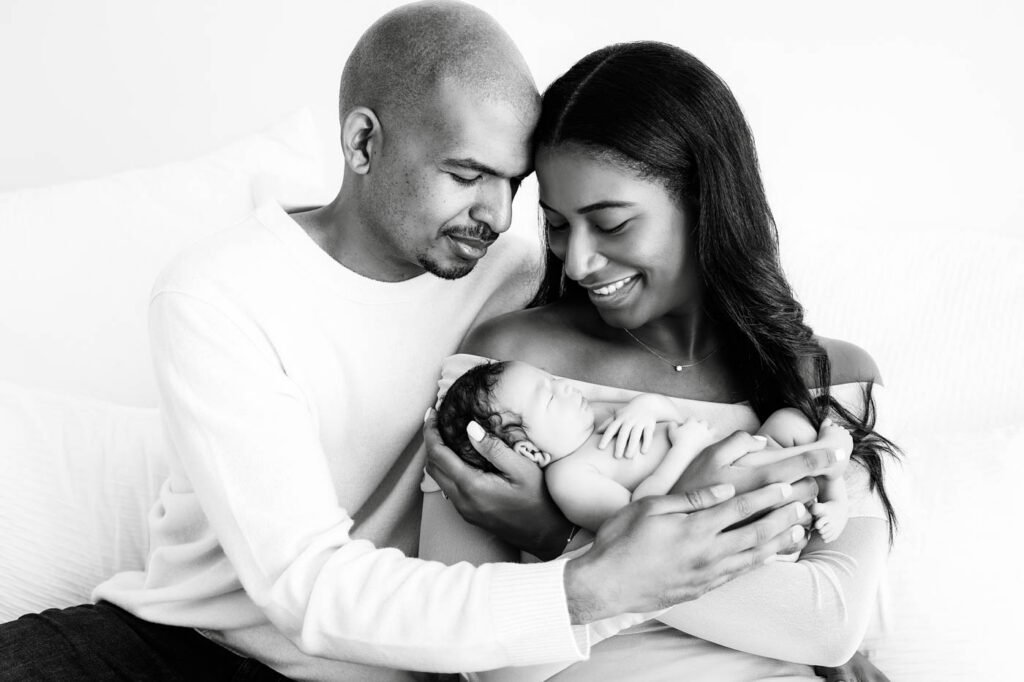
How an Experienced Newborn Photographer Adjusts When Baby Won’t Settle
A newborn session rarely follows the exact same sequence from one baby to the next. After more than a decade of photographing newborns, I’ve learned that small changes in a baby’s body language often tell me when to continue, make an adjustment, or stop for a break.
During a session, I pay attention to things such as:
- Hands or fingers becoming tense
- Restless legs or repeated stretching
- Baby turning away from a position
- Difficulty settling after being moved
- Relaxing more easily in one position than another
- Hunger or the need for another soothing break
Those cues help determine whether I should change the pose, adjust the wrap, move to a different setup, photograph baby while awake, or simply give them a few minutes with a parent.
This flexibility is especially important during posed newborn photography, because the goal is never to complete a predetermined list of poses at the expense of the baby’s comfort. Some sessions move quickly through several setups, while others require more feeding, soothing, and transition time. There isn’t one routine that works for every newborn. Knowing when not to move forward can be just as important as knowing how to create the pose in the first place.
If you have questions about timing, safety, family images, or what happens when a session doesn’t go exactly as expected, my Newborn FAQs cover many of the questions parents ask before reserving their due date.
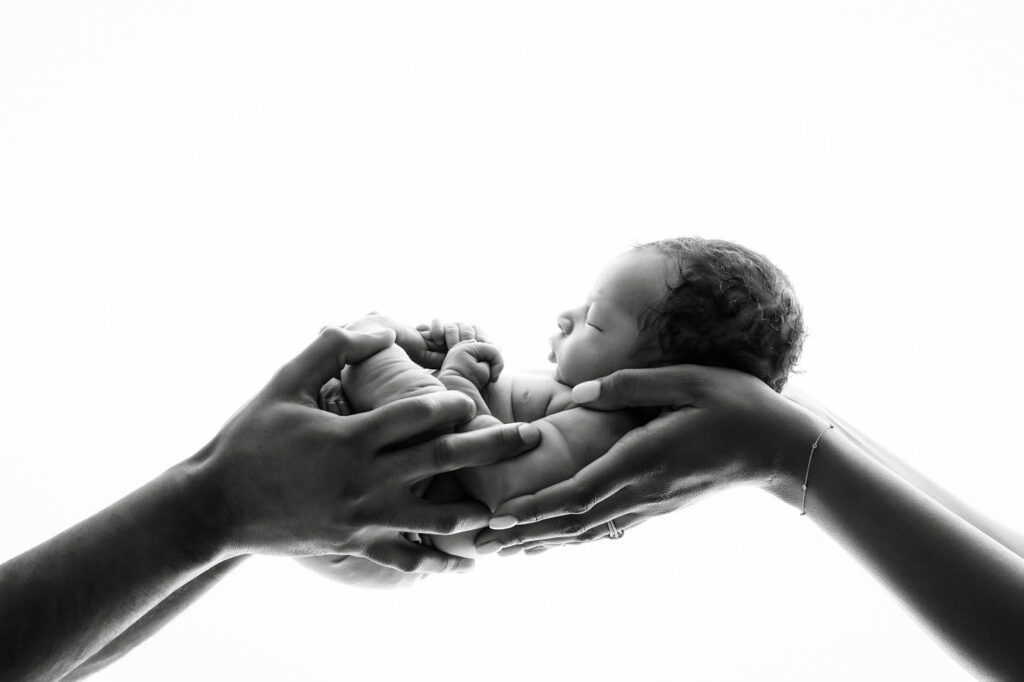
A Successful Newborn Session Doesn’t Depend on Sleep
After photographing hundreds of newborns, I’ve learned that there is no single version of a successful session. Some babies sleep through several setups, some stay awake much longer, and many move back and forth between the two. I adjust the posing, wrapping, and pace based on what each baby is comfortable doing that day.
If you’re looking for a Dallas newborn photographer who works around your baby rather than expecting them to follow a rigid schedule, you can Inquire to check availability and reserve your due date. We’ll create a newborn photoshoot that works with your baby’s temperament, whether they sleep through most of the session or barely close their eyes.