One of the most common concerns parents have before a newborn session is whether their baby will actually sleep. The good news is that an awake baby does not prevent us from creating a varied gallery. Some newborns sleep through several setups, while others spend much more of the appointment alert.
After more than a decade working as a Dallas newborn photographer, I’ve photographed both and I’ve learned to adjust the session rather than expect every baby to behave the same way. If your baby is awake, I can begin with wrapped poses, close-up images, or setups that work well with open eyes and transition into sleepier poses if they settle later.
If you’re deciding whether a posed studio session is right for your family, my Newborn Experience page explains how the session works, what’s included, and what to expect at the studio.
Can You Still Get Good Newborn Photos If Your Baby Is Awake?

Can You Still Get Newborn Photos If Your Baby Stays Awake?
Yes. A baby does not have to sleep through the entire session to create a varied final gallery. Awake newborns can make eye contact, stretch, move their hands toward their face, and give expressions that simply aren’t possible while they’re sleeping. During newborn photography in Dallas, I adjust the setup order based on what the baby is doing rather than waiting for sleep before I begin.
If your baby is calm and alert, I may start with:
- Wrapped setups that work well with open eyes
- Close-up photographs of the face, hands, and feet
- Simpler poses that allow for natural movement
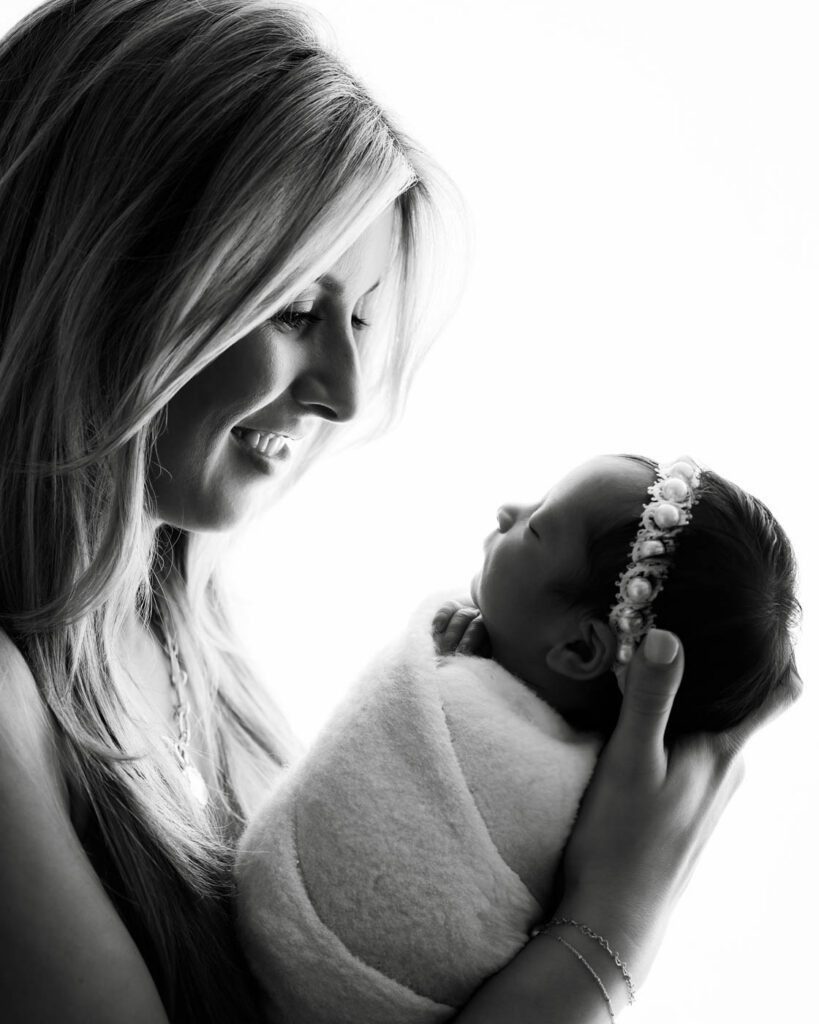
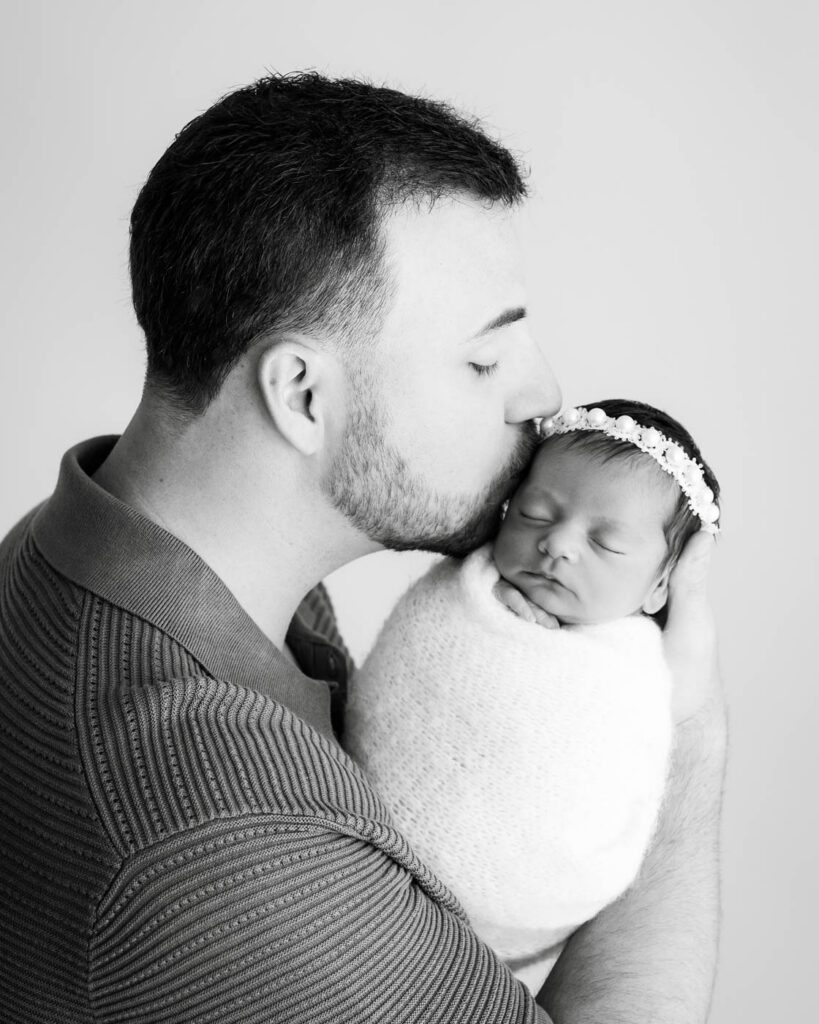
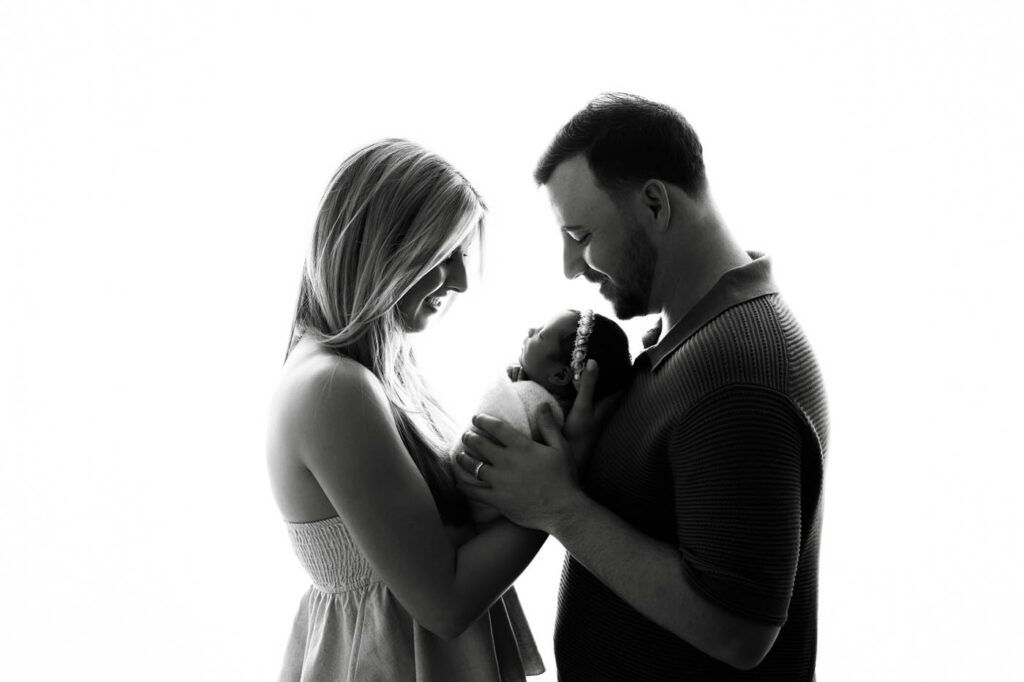
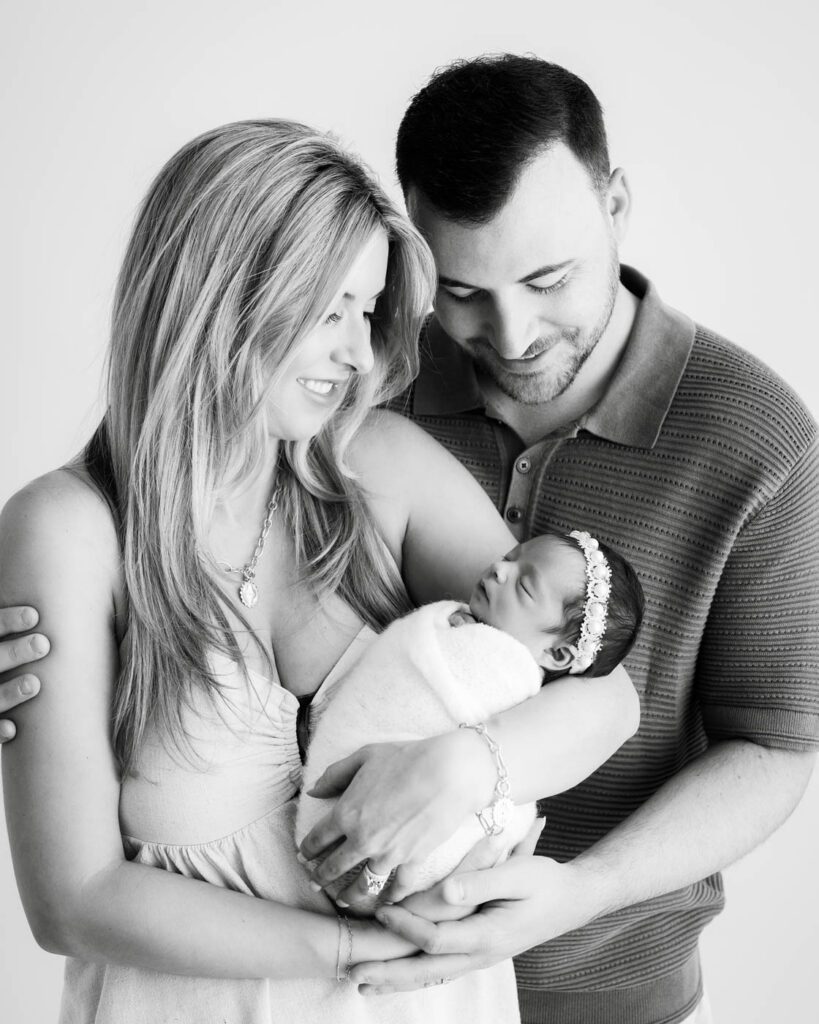
- Parent-and-baby images
- Awake setups before transitioning into sleepier poses later
After more than a decade of photographing newborns, I’ve learned that some babies sleep almost immediately while others need much more time. I don’t consider those awake periods a problem, they simply change which images I photograph first.
If your baby eventually falls asleep, we can transition into poses that work better when they’re deeply settled. If they stay awake longer, I continue working with what they’re comfortable doing rather than forcing the session into a predetermined sequence.

Why Newborn Sessions Don’t Depend on Hours of Sleep
Newborns rarely sleep on command for an entire session. They may wake to eat, stretch between setups, need extra soothing, or simply spend part of the appointment quietly alert. After photographing newborns for more than a decade, I expect those transitions and build time for them into the session. As a newborn photographer in Dallas, I adjust the order of the session based on what your baby needs rather than trying to complete poses in a fixed sequence.
Depending on how they are responding, I may:
- Begin with a wrapped setup while baby settles
- Photograph awake images when they are calm and alert
- Pause for feeding, burping, or soothing
- Change the setup if baby is uncomfortable in a position
- Return to sleepier poses later in the session
A baby waking between setups doesn’t mean anything has gone wrong. Full newborn sessions allow enough time for those changes, which is one reason I can work at the baby’s pace instead of rushing through a checklist. The goal isn’t to keep your baby asleep for several uninterrupted hours. It’s to create variety while working with whatever your baby is doing that day.
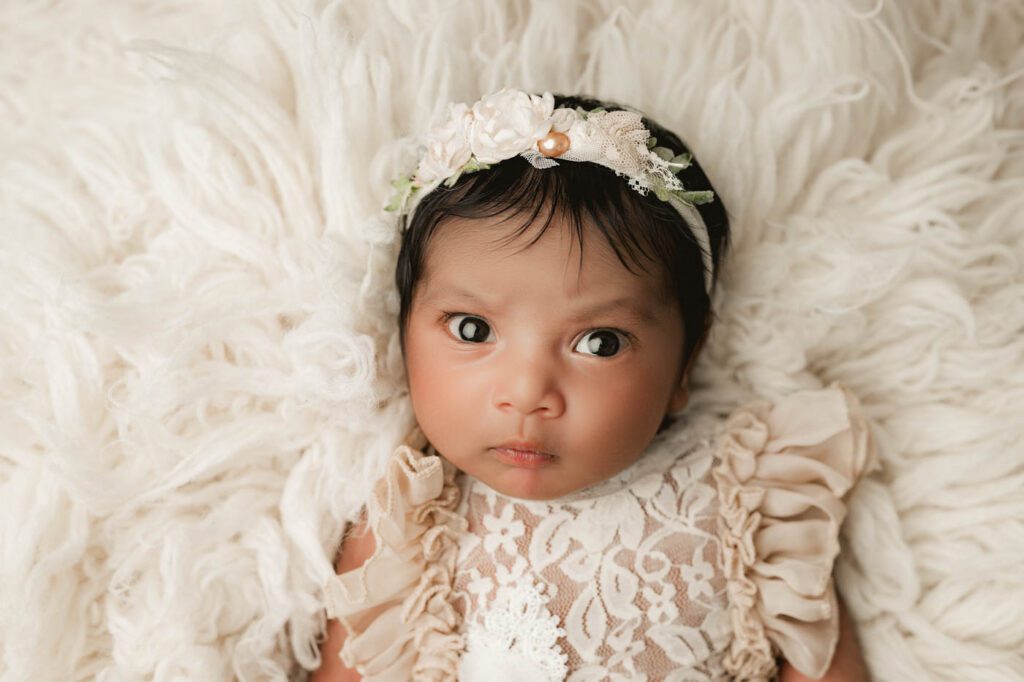
How I Adjust a Newborn Session Based on Your Baby’s Cues
A large part of photographing newborns is knowing when to continue with a setup and when to change direction. Before repositioning a baby, I’m watching how comfortable they appear and how they respond to wrapping, touch, movement, and transitions between poses.
During Dallas newborn photography, some of the cues I watch for include:
- Relaxed hands versus tightly clenched fists
- Repeated stretching or restless movements
- Turning the head or body away from a position
- Rooting or other signs that baby may be ready to eat
- Settling more easily when wrapped or held
- Becoming alert after being repositioned
- Relaxing once a pose or setup is adjusted
Those small reactions help determine what happens next. I may continue with the setup, adjust the wrap, photograph baby awake, pause for feeding or soothing, or move to a completely different pose. After more than a decade of working with newborns, I’ve learned that knowing when to change course is just as important as knowing how to create a pose. The session follows the baby rather than requiring the baby to follow a predetermined sequence.
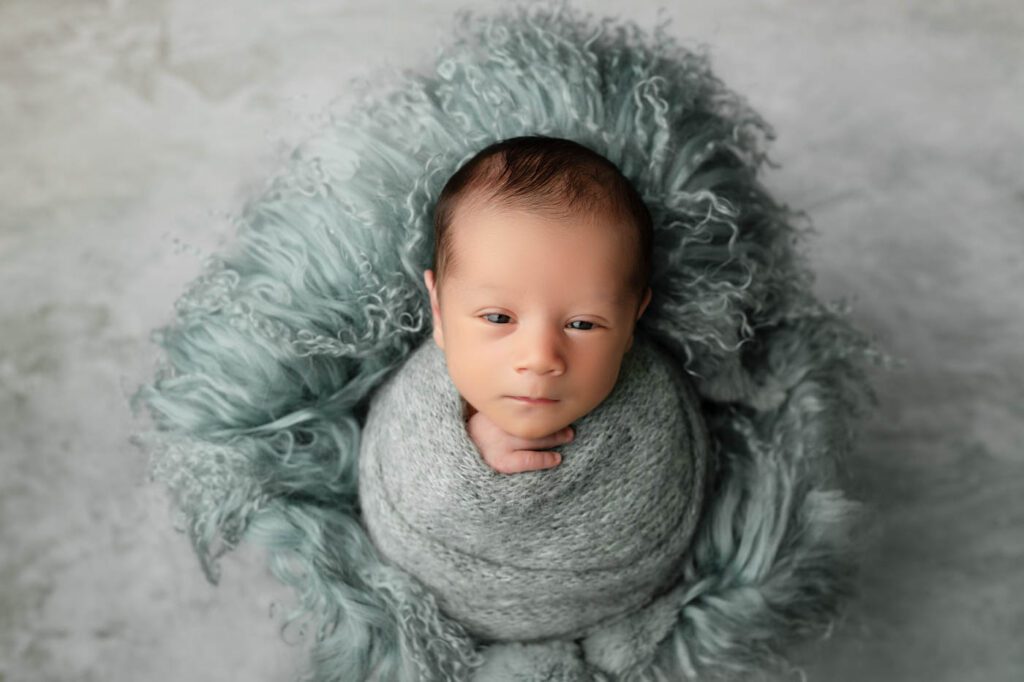
Why Wrapped Newborn Photos Can Help Baby Settle
Wrapping is often one of the first things I try when a baby needs a little more time to settle. Some newborns relax quickly with their arms tucked in, while others prefer their hands closer to their face or need a looser wrap before becoming comfortable.
During a posed newborn photography session, wrapped setups also give me an opportunity to see how baby responds before moving into more open poses. I may adjust the wrap, change hand placement, or simply stay with a setup longer if baby is comfortable.
Wrapped newborn photos can also work especially well when a baby is awake because they allow for:
- Open-eye images while baby is calm
- Close-up photographs of the face and hands
- Simple transitions between setups
- Different wrap colors and textures
- An easier move into sleepier poses if baby settles later
I don’t use the exact same wrapping style or sequence for every newborn. The setup changes based on how the baby responds throughout the session.
How to Prepare for Your Newborn Session
There is no need to completely change your baby’s routine before arriving. In fact, I would remove the recommendation to keep baby awake before the drive. Parents already have enough to think about, and an overtired baby doesn’t necessarily make a session easier.
For newborn session preparation, I recommend keeping things simple:
- Dress baby in loose clothing that is easy to remove
- Avoid tight socks or outfits that may leave temporary marks
- Bring extra diapers and feeding supplies
- Pack a pacifier if your baby normally uses one
- Expect that baby may need more than one feeding during the session
- Allow extra time so arriving at the studio doesn’t feel rushed
Once you arrive, I work around your baby’s feeding and settling needs rather than expecting everything to happen on a fixed schedule. Full newborn sessions are designed with enough time for feeding, soothing, diaper changes, and slower transitions between setups.
That last paragraph is especially useful because it gives prospective clients a concrete reason a full newborn studio session has more flexibility without repeating the priority keywords again.

How Feeding Breaks Fit Into a Newborn Session
Feeding breaks are a normal part of a studio newborn session. Some babies arrive ready to sleep, while others want to eat again shortly after we begin. I never expect parents to delay a feeding just to keep the session moving.
After more than a decade of photographing newborns, I’ve also learned that feeding needs can change throughout the appointment. A baby may eat once, need several smaller feeds, or become hungry again after being wrapped and repositioned.
During a full newborn session, we can pause for:
- Nursing or bottle feeding
- Burping and settling afterward
- Diaper changes when needed
- A few quiet minutes with Mom or Dad
- Additional soothing before moving into the next setup
These breaks are one reason full newborn sessions allow more time. I can adjust the setup order around feeding rather than rushing baby into another pose simply because we are watching the clock. In many sessions, a baby who has been awake for a while settles more comfortably after eating. And if they don’t fall asleep afterward, that’s fine too, we can continue with awake images until they are ready for something different.
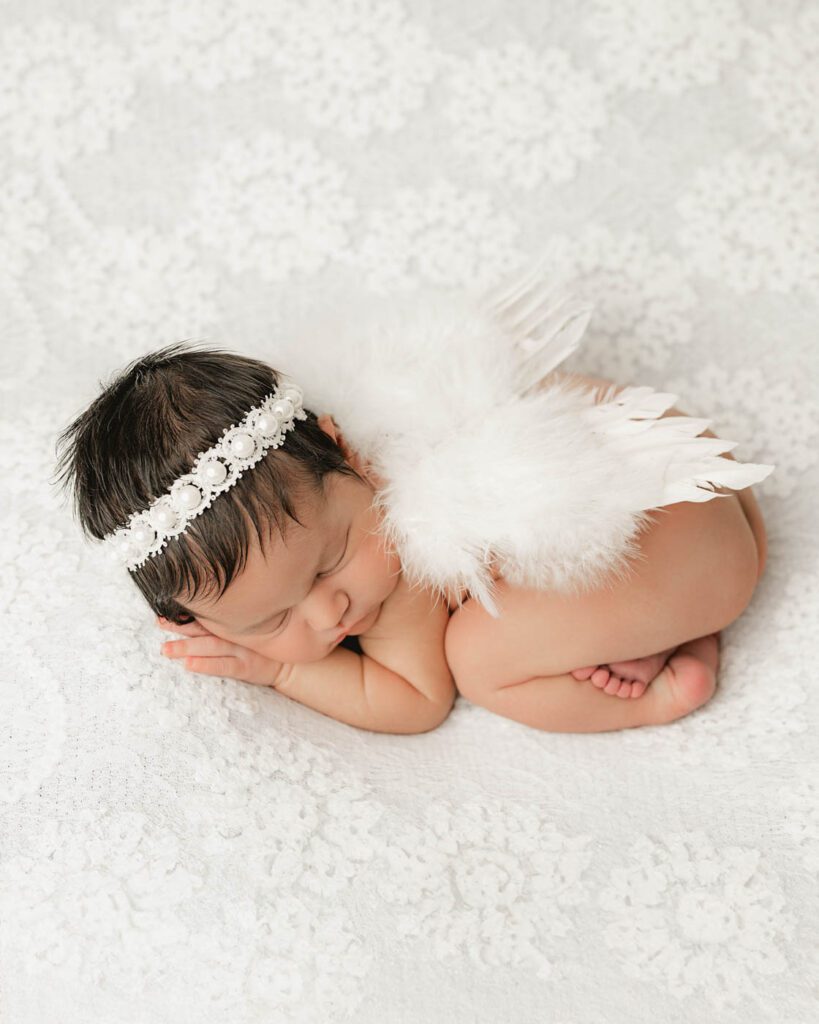
How I Prepare the Studio Before Your Newborn Session
Long before a family arrives, I’ve already started preparing the studio. Having wraps, blankets, posing surfaces, accessories and lighting ready ahead of time means I can focus on your baby once the session begins instead of stopping repeatedly to organize equipment or build setups.
Before each posed newborn session, I typically:
- Sanitize wraps, blankets, baskets, and posing surfaces
- Warm the studio so baby can remain comfortable during lightly dressed setups
- Arrange wraps and accessories around the selected color palette
- Test lighting before the first photograph
- Prepare additional setup options in case baby responds better to something different
- Organize bonnets, headbands, layers, and textured fabrics before the family arrives
I also prepare more options than we may actually use. After more than a decade of photographing newborns, I’ve learned that a setup that works perfectly for one baby may not be the best choice for another. Having alternatives ready allows me to change direction without slowing down the session.
That preparation is an important part of a full service newborn photography studio experience. Most families never see what happens before they walk through the door, but it gives me more flexibility once the session begins and lets the baby’s comfort determine which setups we use.