
Building a newborn photography portfolio takes more than photographing a few sessions and choosing your favorite images. Newborn safety, posing, lighting, consistency, and editing all play a role in creating work that feels professional and recognizable.
When I began working in Dallas newborn photography, one of the biggest challenges was learning which images actually represented the style and experience I wanted to offer. Model calls and early client sessions gave me room to practice, refine my workflow, and become much more intentional about what earned a place in my portfolio.
What Should a Newborn Photography Portfolio Include?
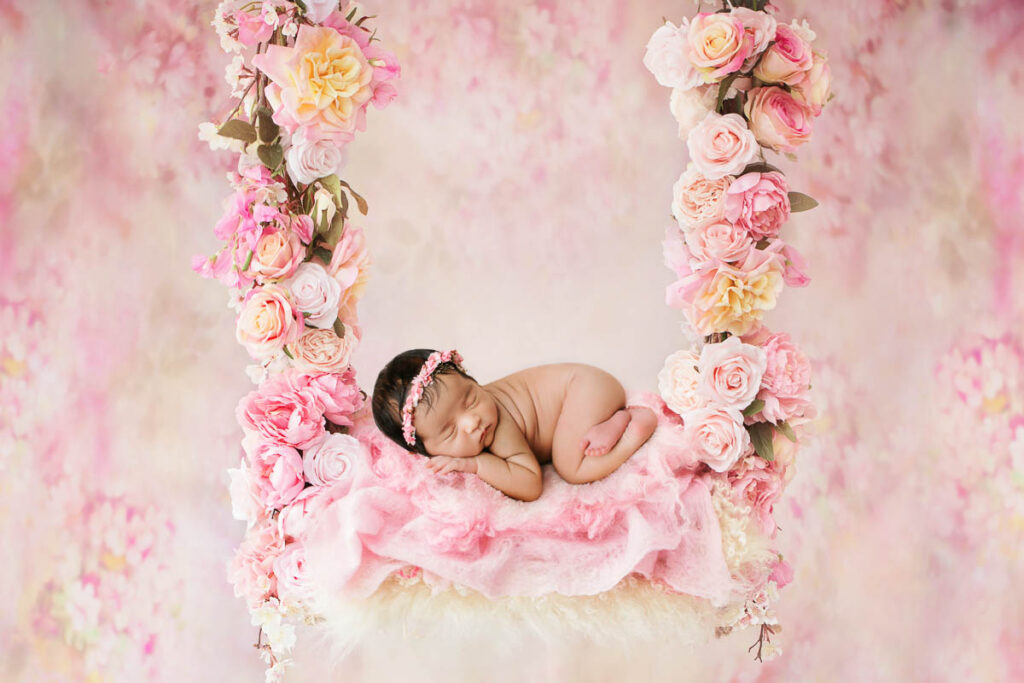
Understanding Newborn Photography Before Building a Portfolio
Before building a newborn photography portfolio, photographers need a strong foundation in safety, posing, lighting, and session flow. Newborn sessions move very differently from maternity or family photography because the baby determines the pace of the session.
Newborn photography requires:
- Safe posing and proper support of the baby’s head, neck, and body
- A warm, controlled studio environment
- Consistent lighting and camera settings
- Patience during feeding, soothing, and settling
- Knowing when a pose should be adjusted or stopped completely
Safety should always take priority over getting a particular image. Babies should never be forced into a position simply because it looks good in a portfolio. Some poses also require composite editing, where multiple photographs are combined so the baby remains supported throughout the setup.
After years of photographing newborns, I’ve also learned that session flow matters just as much as posing. Babies may need to eat, be wrapped, soothed, or given time to settle before moving into another setup. Trying to rush through a predetermined shot list usually makes the session harder for everyone.
Lighting is another major part of creating consistent newborn photography. Whether using studio lighting or natural light, learning how to create soft, controlled light helps keep skin tones, shadows, and editing consistent from one gallery to the next.
A strong portfolio starts with mastering these fundamentals first. Once safety, lighting, posing, and workflow become consistent, it becomes much easier to create images that actually represent the style of work you want clients to associate with your business.
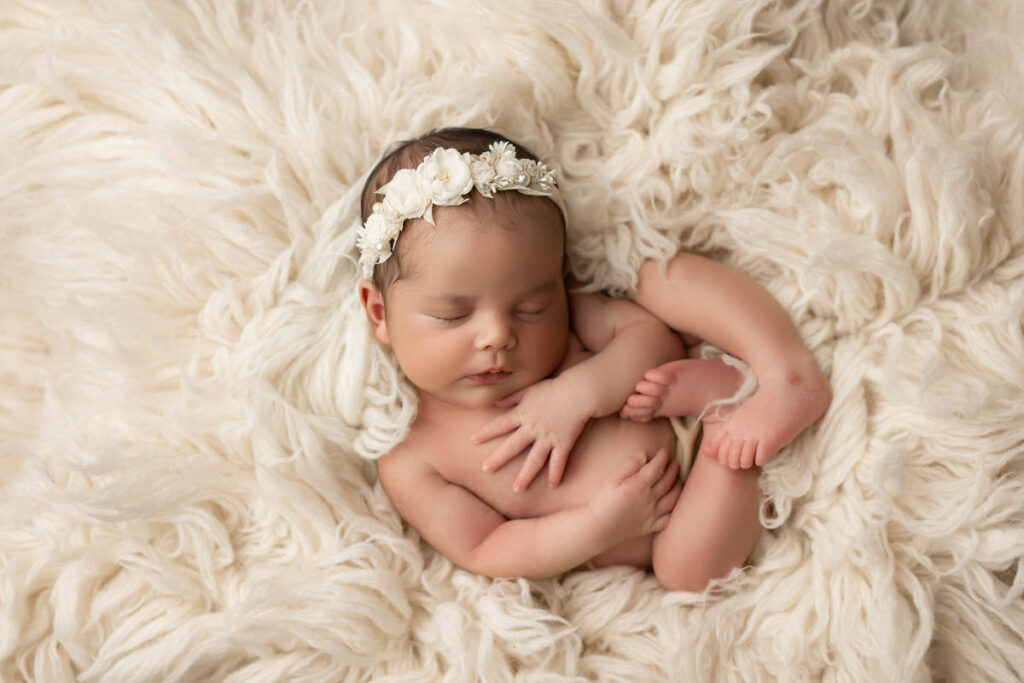
How to Build a Newborn Photography Portfolio Without Paying Clients
New photographers often run into the same problem: you need strong work to attract clients, but you need babies to photograph before you can build that work. This is where carefully planned model calls and practice sessions can help.
When I was building my own newborn photography experience, repetition was one of the most valuable parts of improving. Photographing multiple babies helped me learn that the same pose, wrap, or workflow does not work exactly the same way for every newborn.
A few ways to begin include:
- Photographing newborns for friends or family members
- Offering a limited number of newborn photography model calls
- Providing complimentary portfolio building sessions
- Connecting with local parent groups or community networks
- Asking previous maternity clients whether they would be interested in participating
For a model call, decide beforehand exactly what you need to practice. Instead of trying to photograph every setup you own, choose two or three areas to work on, such as wrapping, posing transitions, lighting, or a particular color palette.
Treat Model Calls Like Real Newborn Sessions
Complimentary does not mean casual. A portfolio building session should follow the same safety standards and professional workflow you eventually want to provide to paying clients.
Use these sessions to practice:
- Preparing your studio before the family arrives
- Moving efficiently between setups
- Soothing and settling a baby
- Maintaining consistent lighting
- Communicating with parents throughout the session
- Selecting and editing a cohesive final gallery
This is also the time to identify where your workflow slows down. Sometimes the issue is not posing itself, it may be having too many props available, changing colors too frequently, or not having wraps and accessories organized before the session begins.
After photographing newborns professionally for years, I have found that simplifying a setup usually produces better results than trying to include everything at once.
Build the Portfolio for the Work You Want to Book
Be selective about what you publish. You do not need to show every successful photograph from every practice session. If you eventually want to specialize in clean, posed newborn photography, your portfolio should primarily show that style. If you want clients looking for neutral colors and simple setups, filling your website with highly themed images can attract the opposite type of inquiry.
A smaller portfolio with consistent newborn photography images is usually more useful than a large gallery containing several unrelated styles. Your early portfolio will continue changing as your posing, lighting, editing, and workflow improve. The goal is simply to make sure the work you show represents the type of newborn photography you want people to hire you for.
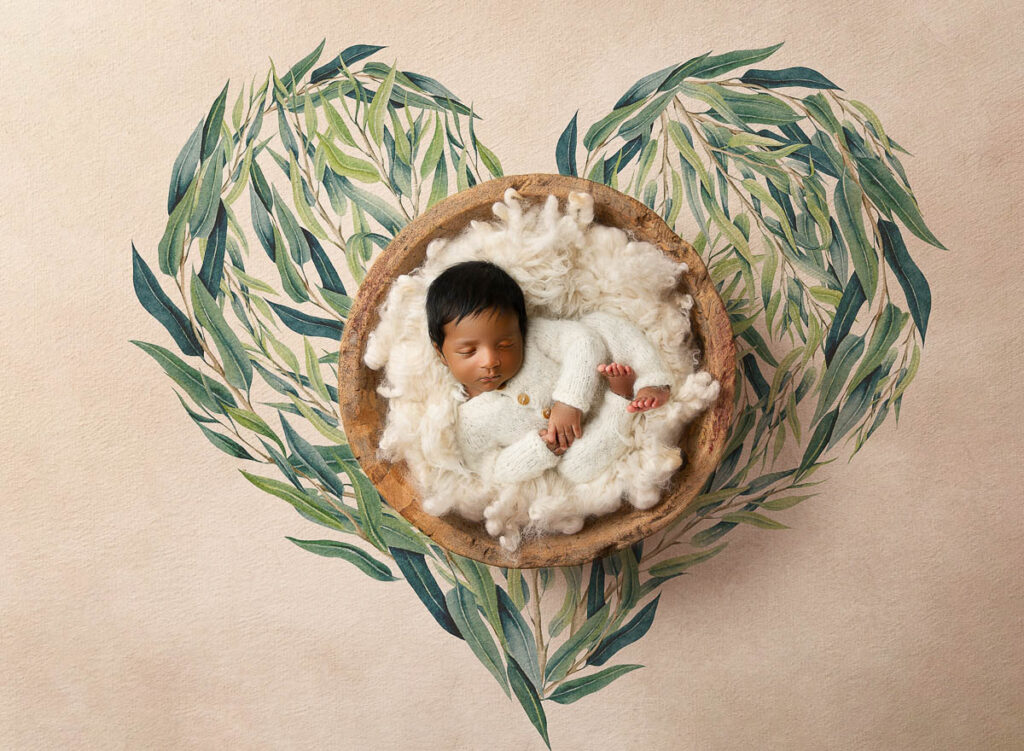
Developing a Recognizable Newborn Photography Style
Your portfolio should make it easy for someone to recognize the type of newborn photography you create. That does not mean every setup has to look identical, but your lighting, colors, posing, and editing should feel connected from one session to the next.
When developing your style, think about the choices you naturally repeat:
- Light and airy or deeper, more dramatic lighting
- Simple setups or more detailed prop-based scenes
- Neutral tones or soft color palettes
- Wrapped images, posed setups, or a combination of both
- Minimal editing or a more polished fine-art finish
Early in your career, it can be tempting to try every backdrop, prop, editing style, and pose you see. I found that narrowing those choices actually makes it easier to improve. Repeating similar lighting patterns and setups gives you a better chance to see what is working—and what still needs adjustment.
Let Your Portfolio Show the Work You Want to Photograph
The images you publish eventually influence the type of inquiries you receive. If you want to attract clients looking for clean, refined newborn photography in Dallas, your portfolio should clearly represent that style. Pay attention to the overall gallery rather than judging each image individually.
Look at:
- Whether skin tones remain consistent
- How backgrounds and props work together
- Whether your lighting changes dramatically between images
- Which poses feel strongest and most natural
- Whether the editing looks cohesive across several sessions
Your style will continue evolving as you gain experience, so there is no need to define everything immediately. Instead, keep refining the elements that consistently produce your strongest work.
For photographers still determining what direction they prefer, reviewing newborn photography portfolio examples can be useful but the goal should be identifying techniques and patterns, not copying another photographer’s finished look.
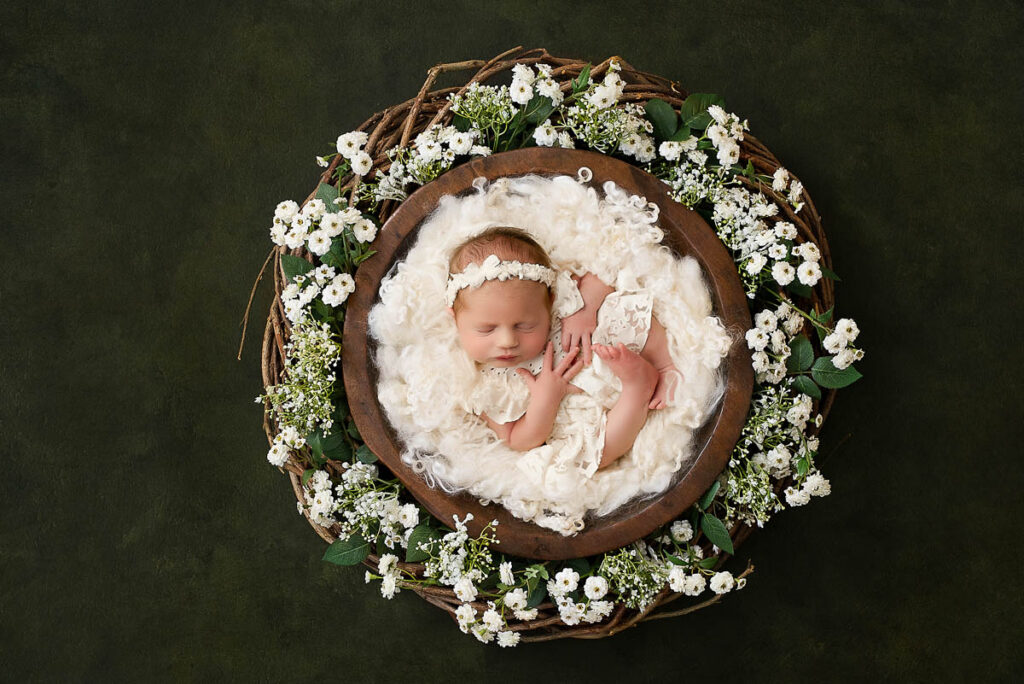
Choosing Newborn Photography Gear and Props
You do not need a large collection of equipment to start building a newborn photography portfolio. A simple setup that you understand well is usually more useful than constantly changing cameras, lenses, lighting, and props while you are still learning your workflow.
For most newborn photography sessions, focus on a few reliable essentials:
- A camera you can operate confidently in manual mode
- A versatile lens suited to the size of your shooting space
- Soft, controlled natural or studio lighting
- Neutral wraps, blankets, and posing fabrics
- Safe, stable props designed to properly support a newborn
- Backup batteries, memory cards, and basic cleaning supplies
I would not get too focused on buying the “perfect” lens when you are starting. Your studio size, shooting distance, and the types of images you create matter more than following a specific equipment list. A 35mm lens may work well in a smaller room, while a 50mm or longer focal length may be easier in a larger space.
Lighting deserves even more attention than gear. Whether you use a window or studio light, learn how the direction and distance of the light affect the baby’s face, skin tone, and shadows. Repeating the same lighting setup during several sessions makes it much easier to recognize small changes that improve your work.
Props should be chosen just as carefully. Instead of buying dozens of baskets, bowls, blankets, and accessories, begin with a small collection that works well together. Neutral wraps, simple fabrics, and a few safe posing pieces can be used repeatedly while still creating variety.
Any prop used for posed newborn photography should be stable, appropriately sized, and padded correctly. A photograph is never worth using a setup that cannot safely support the baby. As your portfolio develops, you can add equipment and props based on what you actually use rather than buying items simply because they are popular with other photographers.
Building an Online Newborn Photography Portfolio
Once you have several strong sessions, your website should make it easy for potential clients to understand what type of newborn photography you offer. Rather than uploading every image you have created, choose photographs that work together and accurately represent the sessions you want to continue booking.
Your newborn photography portfolio should show:
- Your strongest posing and lighting
- A recognizable editing style
- Several examples of the types of setups you offer
- Enough variety to show experience without becoming repetitive
- Work that represents the clients you actually want to attract
One mistake I see photographers make early on is keeping older work online simply because they are emotionally attached to it. As your posing, editing, and lighting improve, your portfolio should improve with you. Review it periodically and remove images that no longer represent your current work.
Your Website Should Do More Than Display Photos
Your portfolio is only one part of your website. Someone considering hiring you also needs to understand what you offer, where you are located, what your sessions look like, and how to contact you. For example, photographers building a local business should naturally include information about their location and services rather than relying entirely on social media. That also gives search engines clearer context about what the business offers.
For my own Dallas newborn photography website, I want someone arriving from Google to be able to move easily from viewing my work to learning about the session experience, pricing, and how to inquire. Social media can introduce people to your work, but your website gives you much more control over how that work is presented. It should represent where your photography is now, not where it was when you first started.
Common Mistakes When Building a Newborn Photography Portfolio
When you are building a newborn photography portfolio, the goal is not simply to create more images. The strongest portfolios usually come from improving a few core skills repeatedly and being selective about what you show.
Some of the most common mistakes include:
Showing too many images
A smaller collection of strong work is usually more effective than a large gallery with repeated poses, weaker images, or inconsistent editing.
Changing editing styles too often
Experimenting is part of learning, but your public portfolio should feel cohesive. Major shifts in color, contrast, skin tones, and lighting can make it difficult for potential clients to understand what your finished work will look like.
Buying too many props too quickly
New photographers can easily spend more time collecting props than improving posing and lighting. A few reliable setups will give you more opportunity to refine your technique.
Ignoring small posing details
Hands, fingers, feet, chin placement, fabric wrinkles, and camera angle can make a significant difference in posed newborn photography. These are often the details that separate an early portfolio from more polished work.
Attempting advanced poses before mastering safety
Some newborn poses require hands-on support, an assistant, or composite editing. If you are unsure how a pose can be completed safely, it should not be attempted simply for the portfolio.
Keeping outdated work online for too long
As your skills improve, revisit your website. Images that helped you build your first portfolio may no longer represent the quality of newborn photography you currently produce.
Keep Refining Your Newborn Photography Portfolio
Building a strong newborn photography portfolio happens gradually. Each session gives you another opportunity to improve your lighting, posing, workflow, editing, and ability to work safely with different babies.
After years of working in Dallas newborn photography, I still notice that small refinements often make the biggest difference. A slight lighting adjustment, better hand placement, a cleaner wrap, or simplifying a setup can completely change the finished image.
Continue practicing, remove work that no longer represents you, and let your portfolio evolve along with your skills. The goal is not to have the largest gallery. It is to show a clear, professional body of work that accurately represents the type of newborn photography you want to continue creating.