
The lens used during a newborn session affects much more than how close or far away a photograph appears. Focal length can change perspective, background compression, how facial features photograph, and how much of a family or setup fits naturally within the frame.
During newborn photography in Dallas, I use different lenses depending on what I’m photographing rather than relying on one lens for the entire session. A close-up of tiny fingers requires a different approach than a full body newborn pose or a photograph that includes parents and siblings.
Understanding those differences is one of the technical details behind creating a varied newborn gallery. Below, I’ll show how different focal lengths are used throughout a session and why lens choice matters to the finished photograph.
Why Focal Length Matters in Newborn Photography
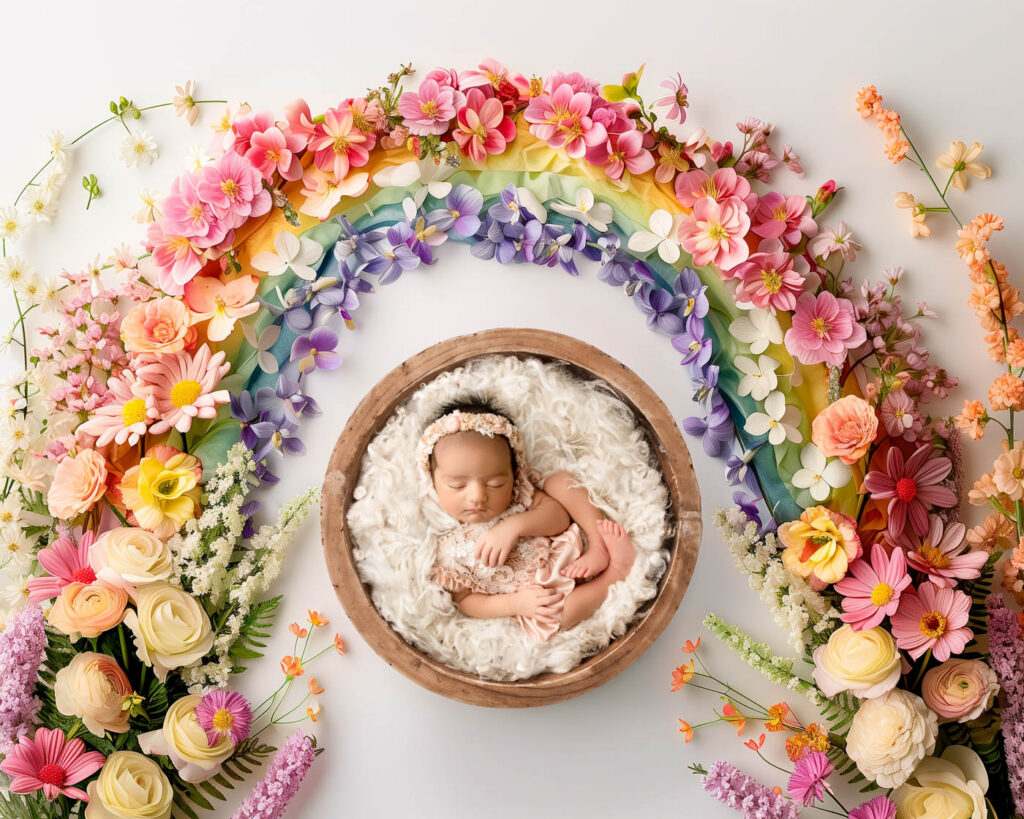
Why Focal Length Matters in Newborn Photography
Different lenses can make the same newborn setup photograph very differently. Focal length affects perspective, how facial features appear, how much of the background is visible, and the distance I need between the camera and the baby.
For professional newborn photography, lens choice becomes especially important because babies are photographed at close range. Using a lens that is too wide and standing too close can exaggerate features, while a longer focal length can create a more flattering perspective for parent and baby images.
I consider several things before choosing a lens:
- How close I need to be to the baby
- Whether I’m photographing a full setup or a small detail
- How many family members need to fit comfortably in the frame
- The amount of background I want included
- Perspective and facial proportions
- How much separation I want between the subject and background
The goal is not to use one “best” lens throughout the entire session. It is to choose the focal length that works best for the specific photograph I’m creating.
When I Use a 50mm Lens During a Newborn Session
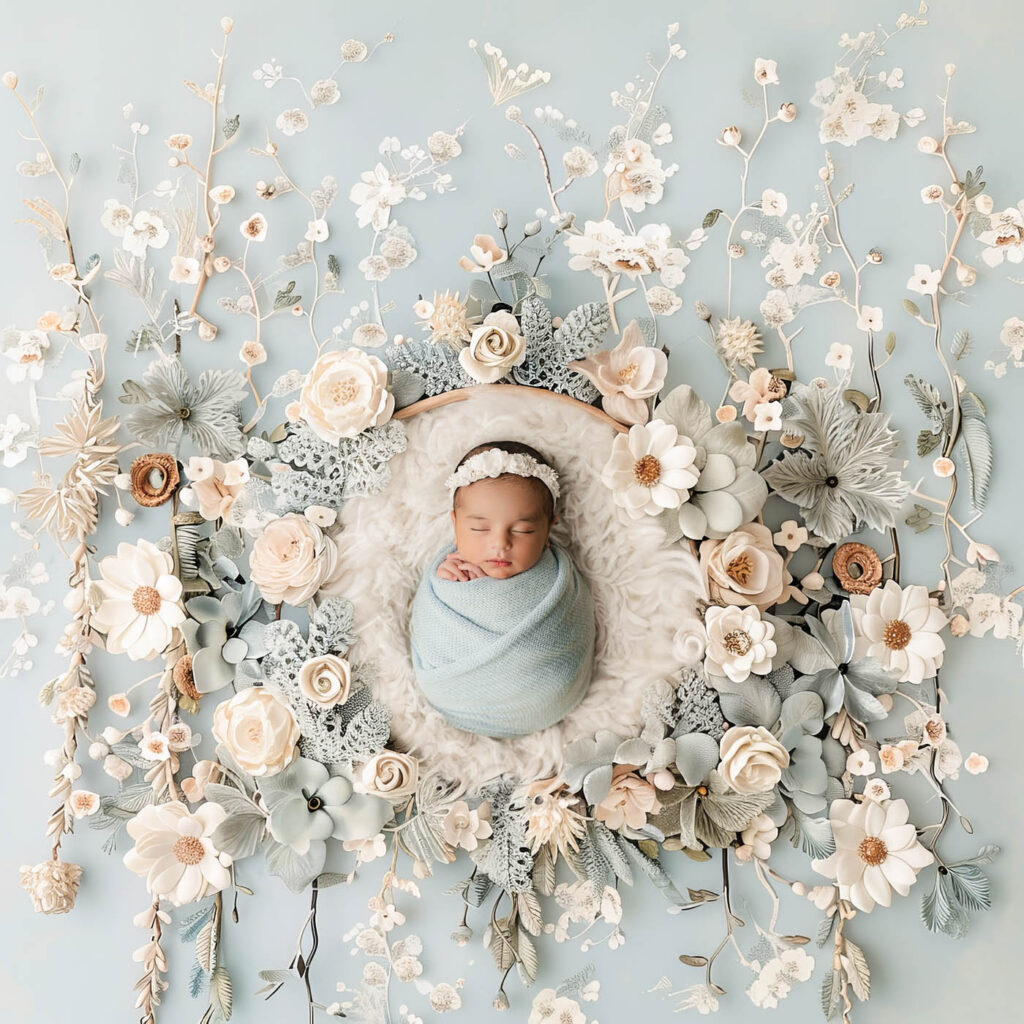
A 50mm lens is useful when I need enough room in the frame for the baby, surrounding setup, or additional family members without photographing from too far away. It works especially well in the studio when I want a balanced view of the scene while keeping proportions natural.
I may use a 50mm lens for newborn photos such as:
- Full baby setups that include some of the surrounding styling
- Parent-and-baby images
- Sibling photographs with the newborn
- Wider compositions that show more of the setup
- Small family groupings in the studio
The 50mm gives me more flexibility than a longer focal length when space is limited, but I still pay attention to camera distance. Moving too close with any wider lens can change perspective and make features nearest the camera appear larger. For that reason, I use the 50mm when the composition benefits from a wider field of view rather than simply using it for every photograph.
When a 35mm Lens Works Best for In-Home Newborn Photography
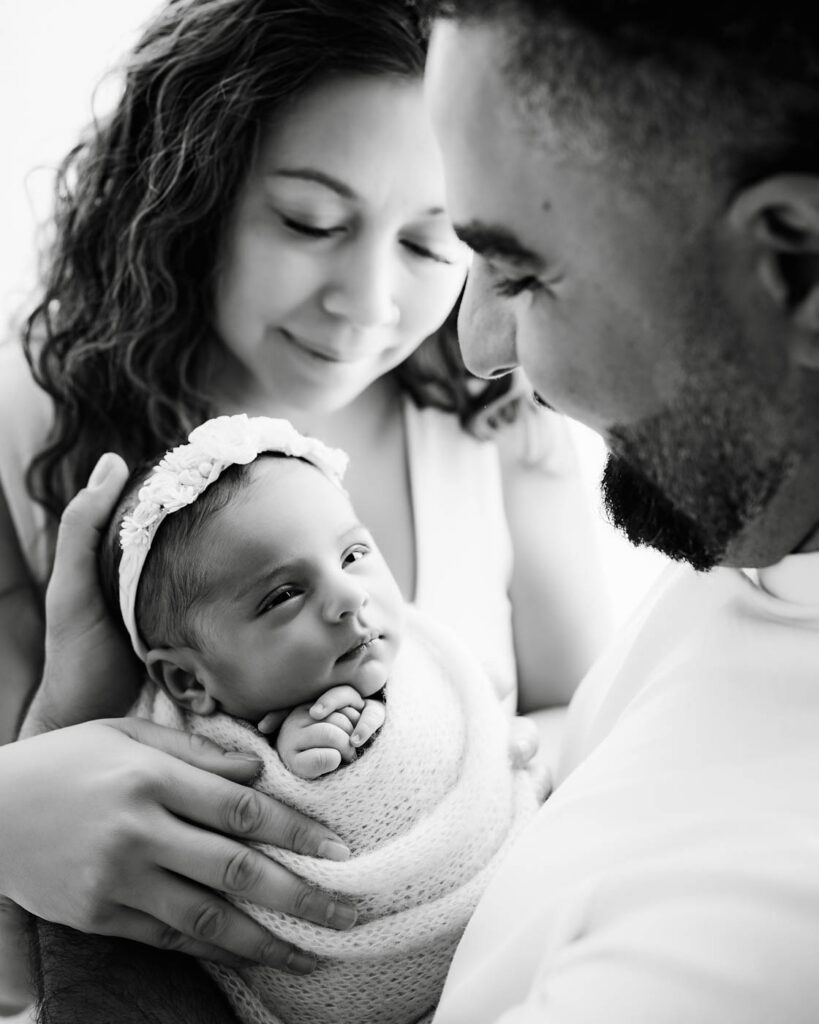
A 35mm lens can be especially useful during an in-home newborn session because bedrooms, nurseries, and living spaces do not always provide the distance available in a studio. The wider field of view allows me to photograph a parent holding the baby, siblings together, or a family sitting on a bed while still including some of the surrounding room.
I may use a 35mm lens for:
- Parent-and-baby photographs in smaller rooms
- Family images on a bed or sofa
- Nursery photographs that include more of the environment
- Sibling interactions with the newborn
- Wider lifestyle compositions when space is limited
The wider perspective does require careful positioning. When people are photographed too close to a 35mm lens or placed near the outer edges of the frame faces and body proportions can appear distorted. I account for that by adjusting my distance, composition, and where each person is positioned within the photograph.
That flexibility is one reason a 35mm lens works well for lifestyle newborn photography at home, where the available space and layout can change significantly from one house to another.
You can also view the Lifestyle Newborn Gallery to see how in-home sessions incorporate both family interaction and the surrounding space.
When I Use an 85mm Lens for Parent and Newborn Photos
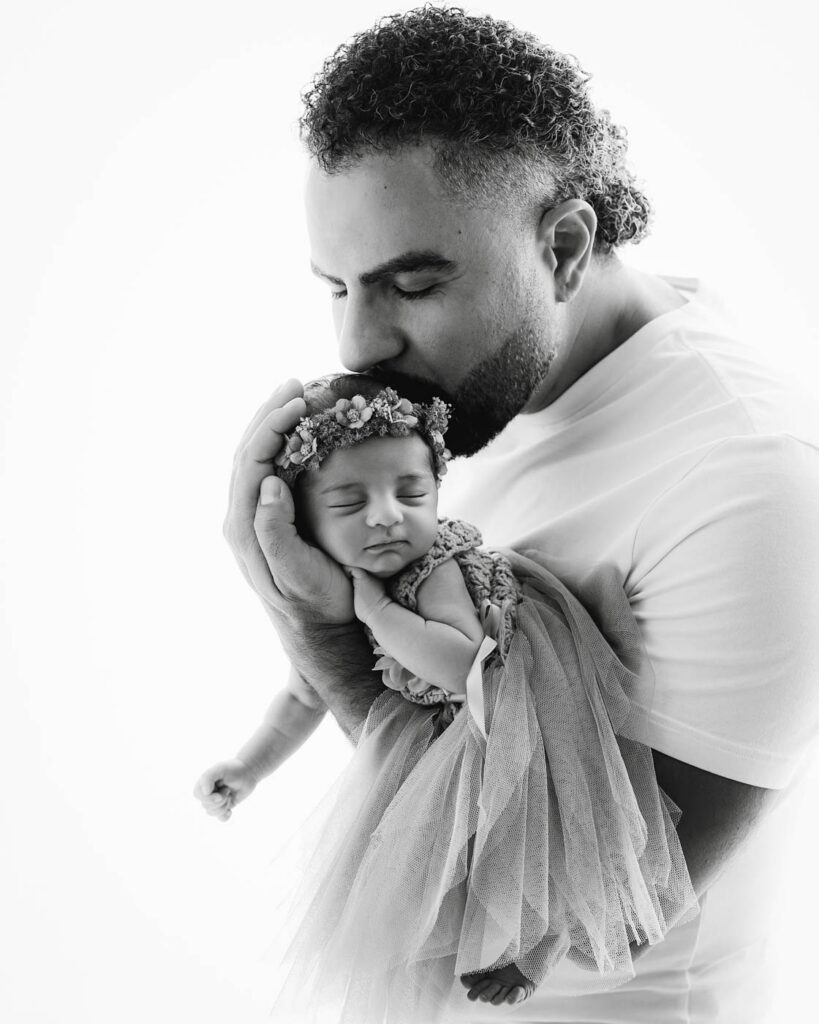
An 85mm lens gives me a narrower field of view and allows me to photograph from farther away than I would with a 35mm or 50mm. That extra working distance can create more natural looking facial proportions, which is especially helpful for photographs of parents holding their baby.
I may use an 85mm lens for newborn photography when photographing:
- Mom or dad holding the baby
- Parent-and-baby close-ups
- Sibling and newborn images when space allows
- Tighter compositions that do not need the entire setup in view
- Individual family photographs with less background visible
Longer focal lengths can also make the background appear more compressed and separated from the subject. The result is a cleaner composition when I want the attention primarily on faces and interaction rather than the surrounding environment.
The 85mm is not the right choice for every setup because it requires more physical distance between me and the subject. In tighter areas, I will switch to a shorter focal length rather than forcing the composition.
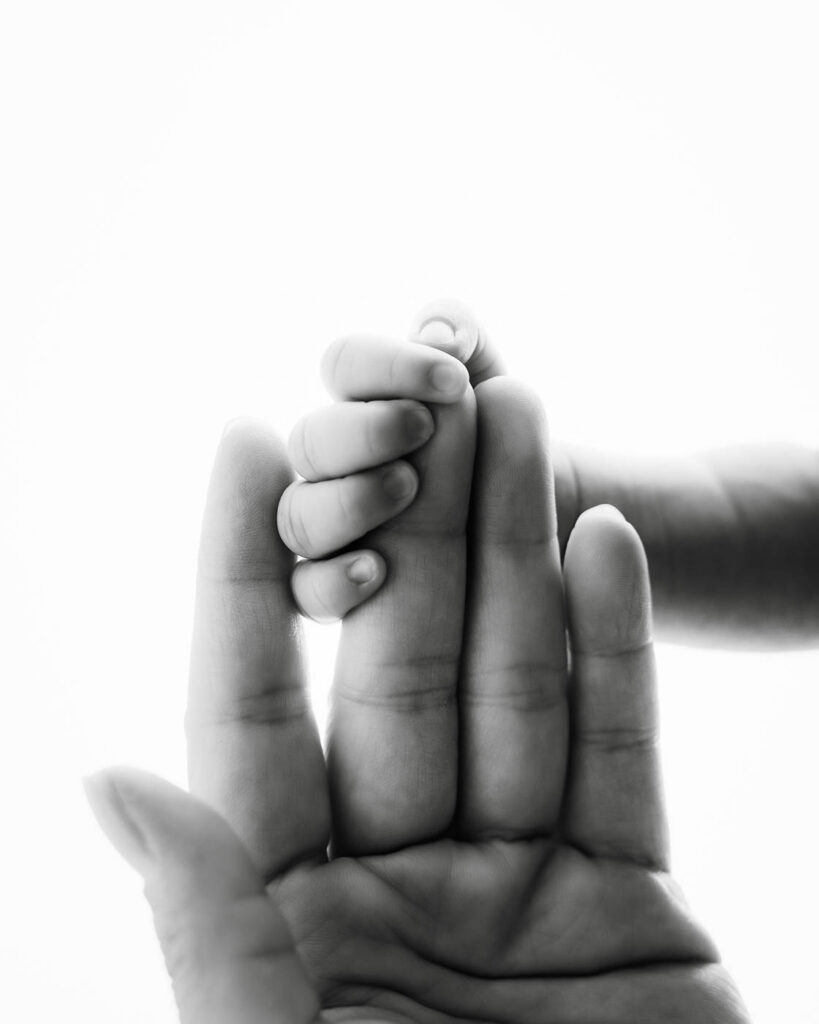
Why I Use a Macro Lens for Newborn Detail Photos
A standard lens can photograph a baby closely, but a true macro lens is designed to focus at much shorter distances and capture very small details with far more precision. I use it when I want individual features to fill the frame without having to crop heavily afterward.
A macro lens works especially well for:
- Eyelashes and lips
- Fingers and fingernails
- Toes and tiny wrinkles
- Wispy hair
- Small facial details
- Close-up photographs of hands resting against a parent
Because macro photography creates a very shallow area of sharp focus at close distances, camera position and focus placement become especially important. Even a small movement from the baby can shift the sharpest point of the photograph, so these images are usually created once the baby is settled and comfortable.
Detail photographs add a different perspective to the finished gallery than full body poses or family images. If you’d like to see why I include them, you can also read Why Newborn Detail Photos Matter.
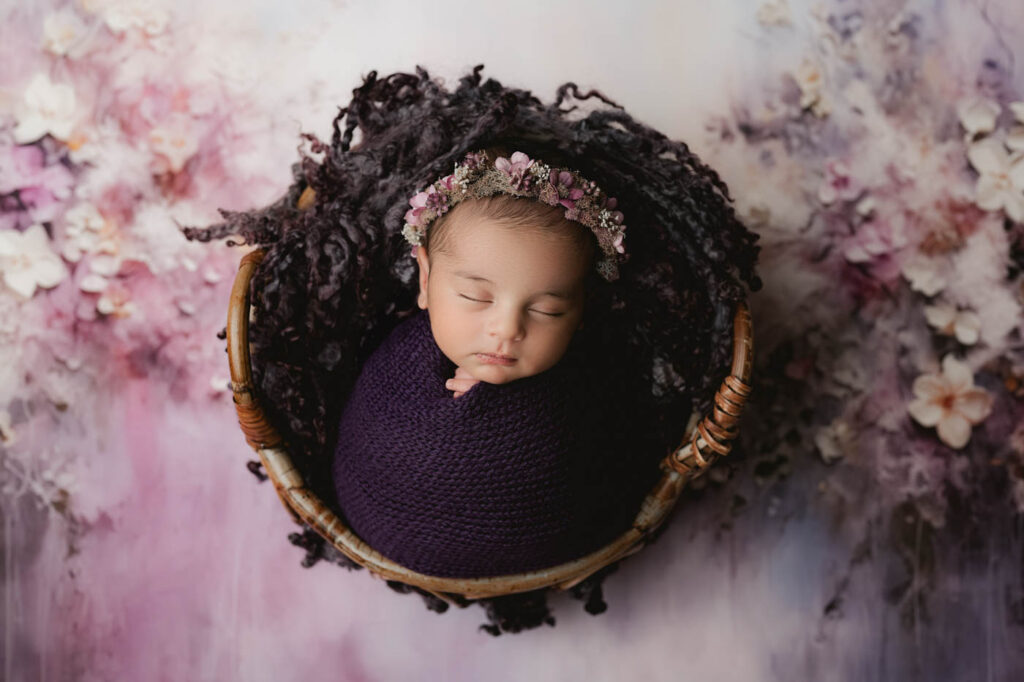
Lens Choice Is Only One Part of the Final Newborn Image
The lens determines perspective and framing, but it does not work independently from the rest of the photograph. Lighting direction, camera distance, posing, aperture, composition, and final retouching all affect how a newborn image looks.
For example, the same 85mm lens can produce very different results depending on how far I am from the subject, where the light is placed, and how much of the background I include. Likewise, a macro lens can capture extremely fine detail, but precise focus and careful positioning are still necessary for the image to work.
Throughout a session, I adjust several technical elements together:
- Lens and focal length
- Camera-to-subject distance
- Lighting and exposure
- Aperture and depth of field
- Composition and cropping
- Final color and retouching
That combination is why I choose equipment based on the photograph I am creating rather than relying on one camera setting or lens for the entire session.
For a closer look at what happens after the photographs are taken, you can also read How Newborn Photos Are Professionally Edited.
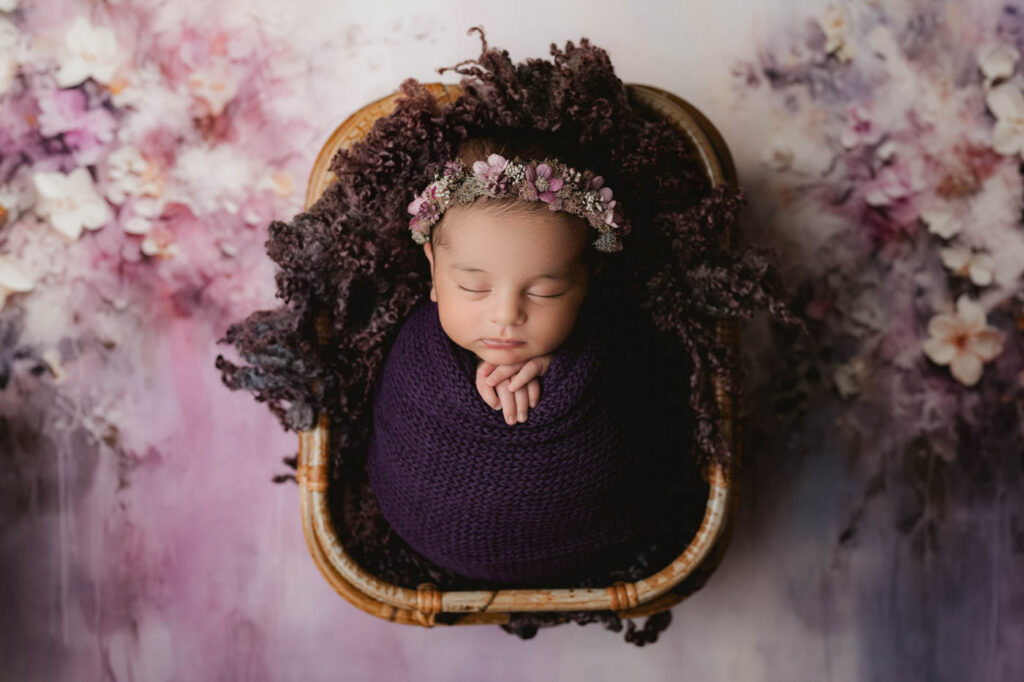
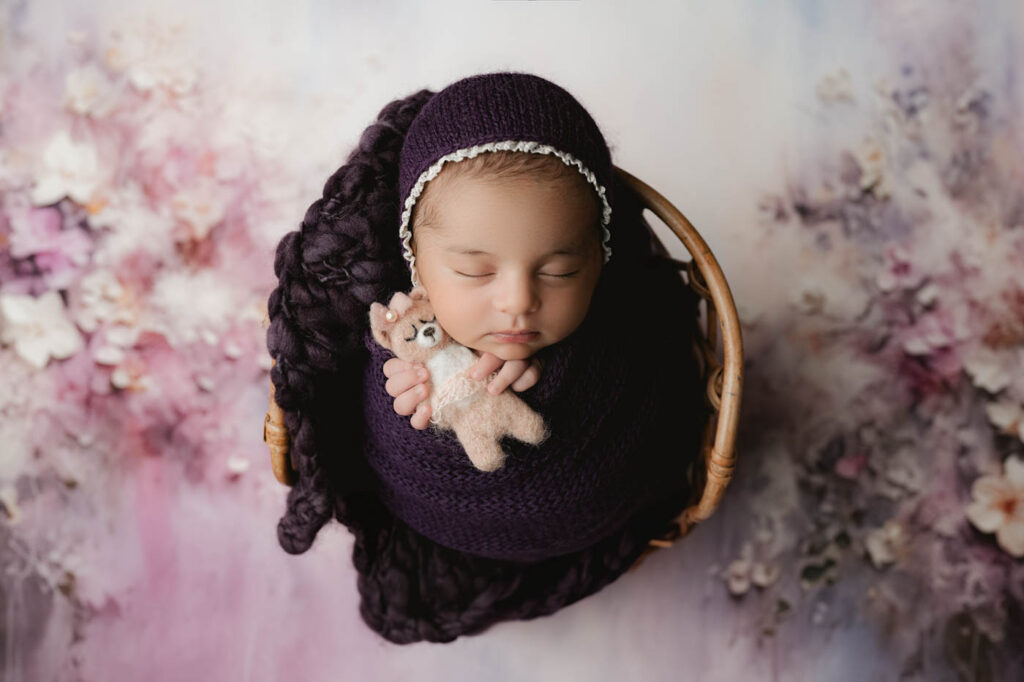
How Lens Choice Creates More Variety in a Newborn Gallery
Using different focal lengths throughout a session allows me to create variety without changing the overall look of the gallery. A wider lens can include parents, siblings, or more of the surrounding environment, while a longer focal length works well for tighter compositions and flattering facial proportions. A macro lens gives me access to details that would otherwise be difficult to photograph at the same scale.
Rather than relying on one lens from beginning to end, I select equipment based on the photograph in front of me. That may mean changing lenses several times during a session as I move between full setups, family images, close ups, and small newborn details.
For families, the technical decisions should largely happen behind the scenes. What you ultimately receive is a gallery with different perspectives, compositions, and details that still feels visually consistent from one image to the next.
If you’re looking for a Dallas newborn photographer and would like information about session availability, you can Inquire here.